Ananya noticed them on a Monday morning. Thin lines under her eyes. A faint crease across her forehead.
She was 31, and her first thought was ageing. Her second was a shopping cart full of expensive creams.
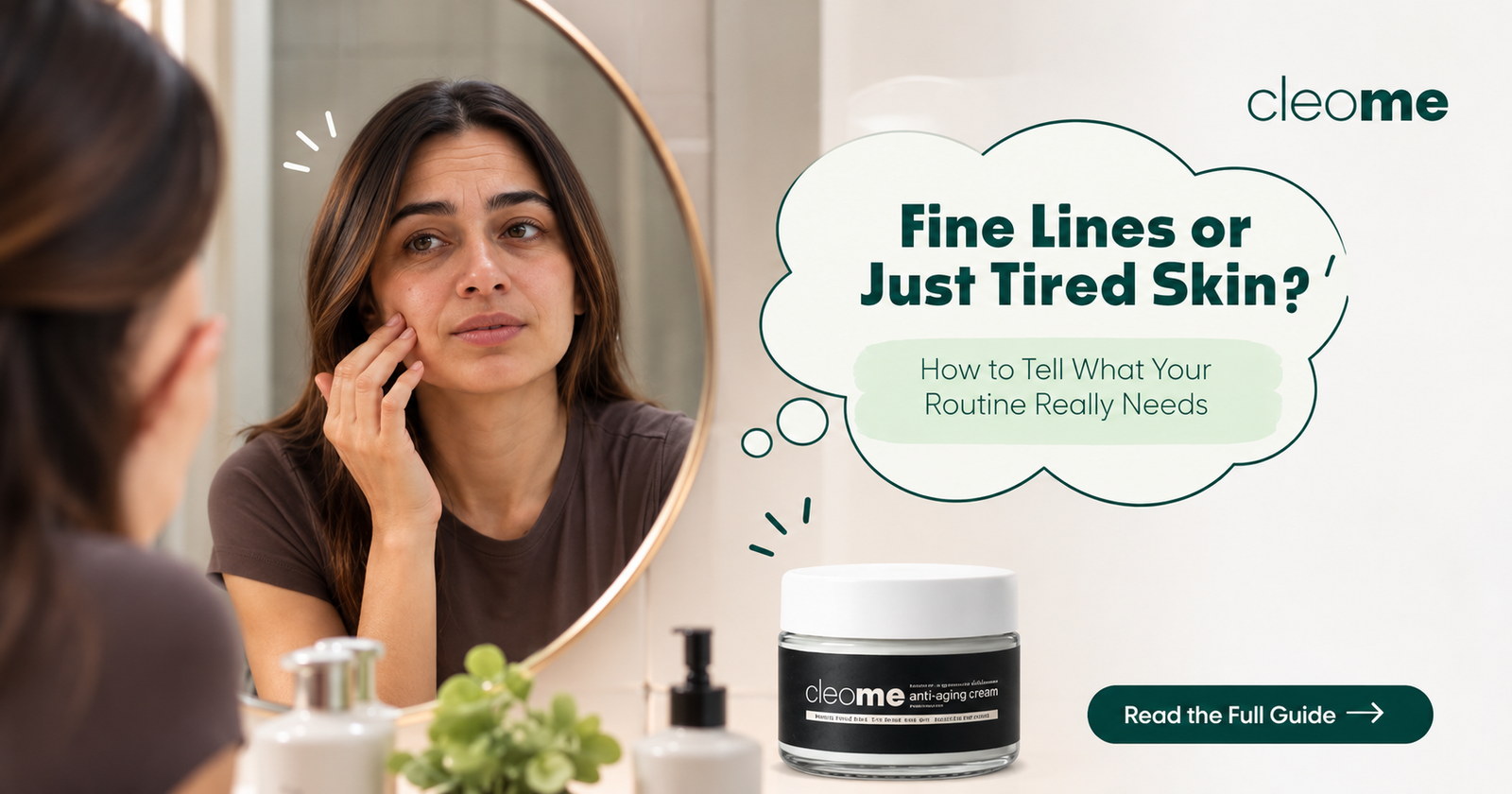
But she stopped and asked a better question. Was she looking at fine lines or tired skin? The answer changed what she bought next.
Fine Lines or Tired Skin? Start With Your Week, Not Your Age
Ananya’s week explained a lot. She had slept five hours a night, worked through deadlines and lived on coffee. Her skin felt tight after washing, and by evening her face looked flat and grey. Before you judge fine lines or tired skin, look at how you’ve been living.
Tired skin lacks water. It loses its bounce, so every small crease shows up more clearly.
Real fine lines are different. They form slowly as collagen breaks down and years of sun exposure add up. A good weekend won’t erase them.
The Fine Line vs Tired Skin Test You Can Do at Home
Ananya tried a simple check. She gently pinched her cheek. Tiny crinkles appeared, like thin paper, and the skin felt tight.
That’s a telltale sign of dehydration. According to Healthline, skin that wrinkles when pinched and doesn’t bounce back quickly is likely short on water. Dehydration also makes fine lines and surface wrinkles more noticeable. If you’ve hydrated your skin and still see lines, they’re probably the real thing.
So the best way to settle the fine line vs tired skin question is patience. Hydrate properly for two weeks, then look again.
Skincare for Tired-Looking Skin Starts With Water
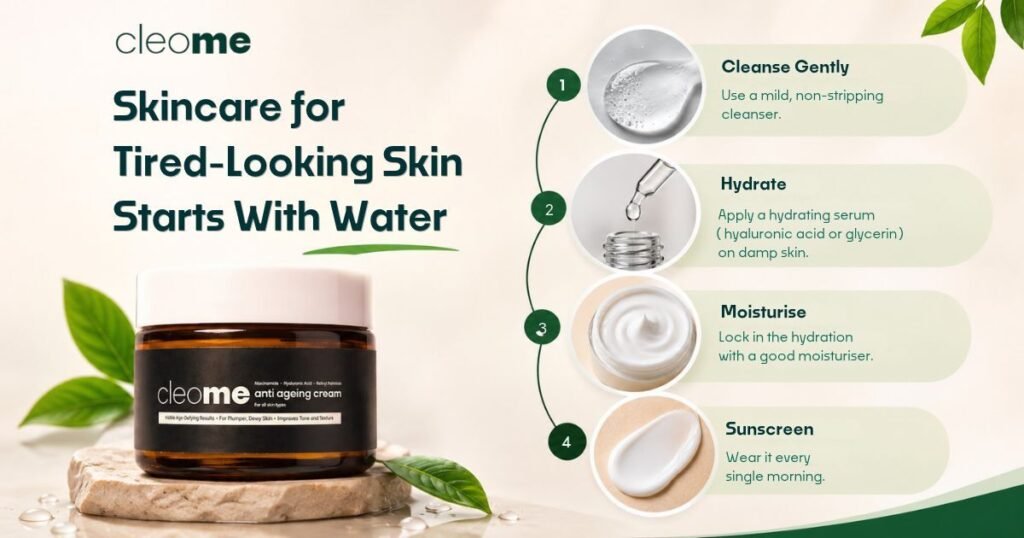
Ananya kept her new routine short and steady:
- A gentle cleanser in place of her harsh foaming wash
- A hydrating serum with hyaluronic acid or glycerin on damp skin
- A moisturiser to lock that water in
- Sunscreen every single morning
She also went to bed an hour earlier.
Good skincare for tired-looking skin doesn’t need ten steps. It needs water, a healthy skin barrier and rest.
Two weeks later, the forehead crease had gone. The lines under her eyes had softened, but they stayed.
That told her something useful.
When the Lines Stay Put
Lines that survive proper hydration are true fine lines. They need longer-term care, not a quick fix.
A steady fine lines skincare routine does three jobs. It protects, it repairs and it hydrates. Sunscreen protects against the UV damage that speeds up collagen loss. Retinol or a gentler plant-based option like bakuchiol supports skin renewal at night. A rich moisturiser keeps everything comfortable.
Choose an anti-ageing cream for fine lines with these ingredients and apply it to clean, hydrated skin. Then give it at least six weeks. Results build slowly.
What Ananya's Mirror Taught Her
She almost spent a fortune on the wrong problem.
Half of what worried her was simply a tired, thirsty face. The other half was real, and now she treats it with care rather than panic.
So before you buy anything, ask yourself: fine lines or tired skin? Hydrate first, watch for two weeks, then choose your next step.
Ready to build a routine that matches what your skin is actually telling you? Explore Cleome‘s natural skincare range and start with the basics your skin is asking for.
FAQs
How can I tell fine lines from tired skin at home?
Gently pinch your cheek. Crinkly, tight skin points to dehydration. Lines that remain after two weeks of proper hydration are true fine lines.
Can poor sleep make fine lines look worse?
Yes. Short nights leave skin dull and dehydrated, so existing lines look deeper. Better sleep and steady hydration soften these temporary lines quickly.
Does drinking more water remove dehydration lines?
Not on its own. Your skin needs topical hydration too. A hydrating serum followed by a good moisturiser makes the visible difference.
When should I start using an anti-ageing cream?
Choose an anti-ageing cream for fine lines once lines stay after proper hydration. Use it nightly with daily sunscreen for at least six weeks.
Does natural skincare help tired-looking skin?
Yes, if it hydrates and protects your skin barrier. Look for gentle cleansers, nourishing plant oils and humectants such as aloe vera or glycerin.