You step out without an umbrella. The rain feels lovely against your face, almost nostalgic, like every monsoon memory rolled into one quick dash across the street.
By evening, though, something’s off. Your skin feels tight in patches and oily in others, a little dull, and a little irritated near the jaw.
That mix of pollution, hard water, and humidity swings is what actually damages your barrier – and it’s exactly why an anti-ageing cream for skin barrier repair matters far more during monsoon than most people realise.
Barrier Repair Starts With What You Put on Your Skin Right After Rain Exposure
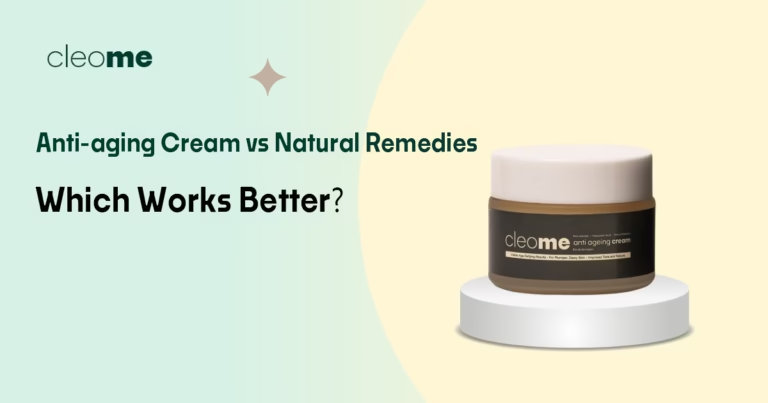
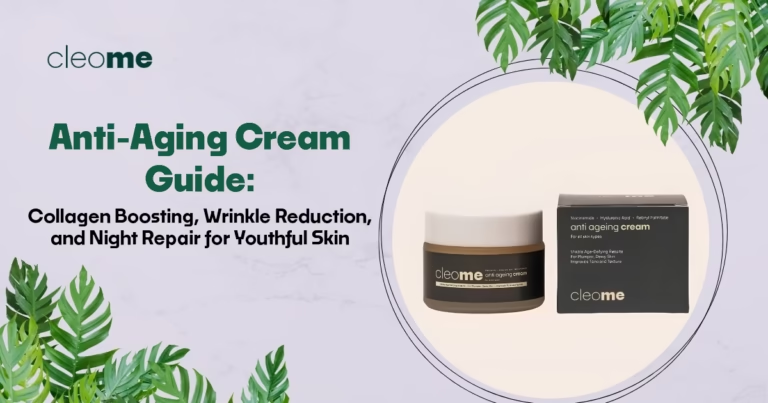
A damaged skin barrier shows up as tightness, dullness, sudden sensitivity, or breakouts appearing out of nowhere. The fastest fix is a rich, ceramide-based anti-ageing cream for skin barrier support, paired with a gentle cleanse the moment you’re back indoors.
Rain’s Impact on Your Skin Barrier
Rainwater in Indian cities picks up pollutants, dust, and acidity on its way down. This strips the skin’s natural lipid layer, the thin barrier that locks moisture in and irritants out.
Once that layer weakens, water escapes faster than it should. Skin turns patchy, sometimes oily in the T-zone and papery dry along the cheeks, all within the same week – a clear signal that anti-ageing cream for skin barrier support belongs in the routine, not just serums aimed at fine lines.
Choosing a Rice Water Face Wash for Sensitive Skin
Harsh, foaming cleansers make barrier damage worse, not better. A rice water face wash for sensitive skin cleans without stripping, since rice water carries natural antioxidants and a mild, soothing texture.
It rinses away grime from monsoon commutes without disturbing what’s left of your barrier. Pairing it with other gentle skincare products for the rest of the routine matters more than any single serum applied afterward.
Mineral Sunscreen on Cloudy, Rainy Days
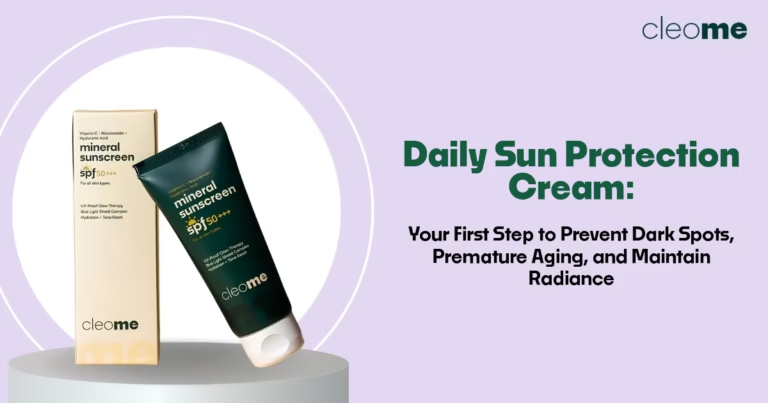
UV rays pass through clouds more easily than people assume, and compromised skin burns and inflames faster than healthy skin does. A mineral sunscreen for sensitive skin, built on zinc oxide rather than chemical filters, sits on the surface instead of absorbing in.
That matters when your barrier is already thin. Chemical filters can sting or irritate freshly stressed skin, while mineral formulas tend to sit calmly, protecting without adding fresh irritation.
Rebuilding the Barrier With Consistent, Gentle Care
Recovery isn’t about one hero product. It’s a small, repeated routine: a soothing cleanse, a barrier-focused cream, and daily use of a mineral sunscreen for sensitive skin, kept up long enough for skin to actually rebuild itself.
Gentle skincare products, free from parabens and sulphates, give a stressed barrier room to heal instead of fighting fresh irritants on top of existing damage. Consistency, more than intensity, is what brings the glow back.
An anti-ageing cream for skin barrier support typically leans on ceramides, hyaluronic acid, and peptides. Ceramides replace what rain strips away; hyaluronic acid pulls moisture back in; peptides support the collagen structure underneath, so skin doesn’t just recover; it looks genuinely healthier once it does.
Let Your Skin Bounce Back Stronger Than the Monsoon Left It
Rain-damaged skin can recover without needing an elaborate ten-step fix. A consistent routine built around gentle cleansing, barrier-repairing cream, and daily sun protection is genuinely enough for most people.
Choose formulas that respect a compromised barrier rather than challenge it further, and give your skin a few consistent weeks rather than expecting overnight change from any single anti-ageing cream for skin barrier repair.
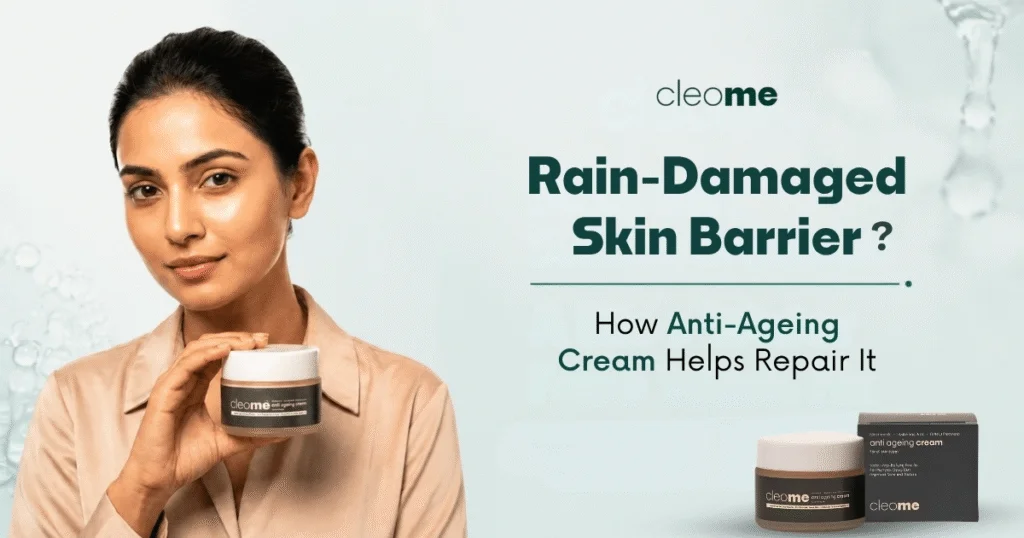
Cleome, a dermatologist-approved, cruelty-free skincare line from Ahmedabad, builds its anti-ageing cream, rice water face wash, and mineral sunscreen around exactly this philosophy — simple, gentle formulations for skin that’s had a rough monsoon and just needs the right support to bounce back.